We are now at the end of year two of the Great Recession (December 2007-2009). To those who asked me after the near meltdown in September of 2008, I guessed that the bleeding of jobs probably wouldn’t end before this December. The bleeding has been slowing in recent months with the “good news” being that fewer jobs are being lost each month than were lost the month before.
A friend in Detroit recently wrote me: “I have survived five downsizings at Chrysler, and I think I’ll be here for a while. The Obama task force did a masterful job, and the Italian guy from Fiat is doing well so far… I think we’ll be good for a while, but if the economy and car sales don’t begin to climb more substantially in the next six months to a year then things could get dicey again.” If jobs continue to be lost, those car sales aren’t going to happen.
Since a jobless recovery is virtually no recovery at all, it is hard to understand why President Barack Obama and his administration have not focused more on job growth. They don’t even need to be as creative as they were in the Recovery and Reinvestment Act of 2009. (It was probably all those incentives for 21st century green technology that was the real cause of those Republican apoplectic fits over the stimulus package.) The Obama administration could reinstate three tried and tested programs that we know will work. That’s a conservative approach, by the way.
One is Franklin Roosevelt’s most noble achievement: the Civilian Conservation Corps, which created 250,000 jobs in 1933 and rose to 2 million jobs by the time the U.S. entered WWII at the end of 1941. The CCC employed young men between the ages of 18 to 25 at $30 per month with most of the money going home to their families. Their activities included reforestation, flood control, national parks, and much more.
The National Park Service will be celebrating its 100th anniversary in 2016. What better time than now to begin eliminating the backlog of repairs and renovations that has been piling up over the years, especially since the anti-park Reagan Era. Even the pro-environment, pro-park Clinton administration couldn’t get the necessary funding from a hostile Republican Congress in the 1990’s. The largest number of unemployed is the 16 to 24 age group (18 %, Sept. 2009). An updated version of the former CCC could do wonders for jobless young men and women and for our national parks. It would be far more constructive than Obama’s plan to send 30,000 more troops to Afghanistan. And it would be a wonderful birthday gift to us and to our future generations.
The second project is a national highways and waterways infrastructure program. We’ve been waiting for it ever since Katrina hit New Orleans and the Gulf Coast and ever since that Interstate highway bridge fell in Minnesota: There are several highway projects in Obama’s original stimulus bill but not nearly enough. Probably every state has specific projects that never seem to get accomplished.
Here in South Arkansas, we know what’s needed. Highway 167 needs to be four-laned from Ruston, LA, to Little Rock. There are several stretches where no work has even begun. The projected Interstate 69 (the NAFTA Highway that will stretch from Canada to Mexico) has “future corridor” signs up, but that’s all. El Dorado, Camden, and Magnolia would greatly benefit from that highway and so would the impoverished delta region of eastern Arkansas. Highway 82 should be, at the very least, three-laned with continuously alternating passing lanes all the way from Texarkana to Greenville, MS. The time for action on all these projects is now. They will create jobs today and economic growth now and in the future.
Thirdly, we should resurrect Richard Nixon’s successful program called “revenue sharing.” Not known for caring anything about domestic issues, Nixon surprisingly recognized that the federal government was very efficient at raising money and the state governments were more efficient at spending it. The states knew best what they needed, so the federal government should share in helping them fund their important programs.
Many states are now facing crises in revenue shortfalls due to the Great Recession. As a consequence, to maintain constitutionally-mandated balanced budgets, they are laying-off teachers and other state employees. That’s the worst thing they could be doing. Unemployment begets less spending, which begets more unemployment, which begets further losses of tax revenues, which begets more government layoffs; and the downward spiral continues. Bringing back Nixon’s excellent “revenue sharing” program could prevent additional layoffs and allow the states to rehire those victimized by the crisis.
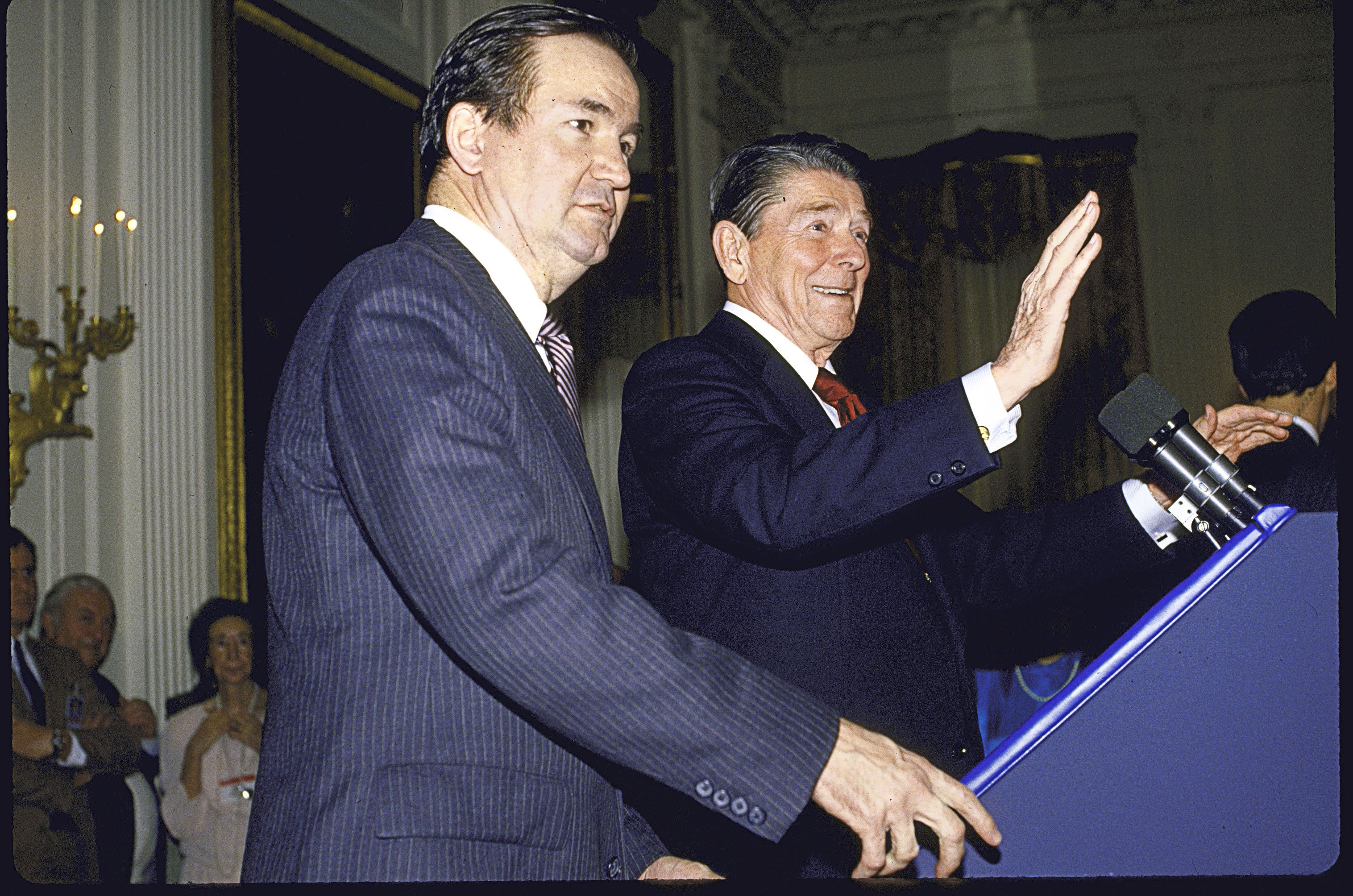
You have to remember that all of these programs were successful before the presidency of Ronald Reagan, who championed the concept that government was the problem. Reagan cut taxes on the upper income brackets thereby limiting the federal government’s ability to raise money; he cut funding for the national parks; he cut funding for highway infrastructure; and he eliminated Nixon’s “revenue sharing.” His philosophy was that states should raise taxes at the local level if they needed or wanted new programs or projects or wanted to continue old ones. The result has been a steady 30-year deterioration of the nation.
The creation of jobs through a modernized CCC, a major national infrastructure program, and a new revenue sharing program would go a long way in bringing about a lasting recovery. Government spending for paychecks is preferable to government spending for welfare checks.
The danger is that President Obama will make the same mistake that Franklin Roosevelt made in 1937. The New Deal had been so successful from 1933 through 1936 that FDR hoped the recovery would continue without the government’s deficit spending. It didn’t work, and the country slipped back into recession in 1937-38. Deficit spending went against everything that FDR had ever believed, so he was never comfortable with it. However, he should have waited until the Great Depression was clearly over to try to end it.
Mr. Obama has seemed to have the same reservation, which would be good in normal times but not now. The bailouts of the banks and the auto industries ended the panic and the probable total economic meltdown. The stimulus package has been quite helpful, even though much of it is not scheduled to kick in until 2010. Consequently, President Obama appeared to become more concerned with the deficit than with job growth – until this December. Hopefully, pressure from the Democratic Congress, recent bleak job forcasts from the Federal Reserve, and the president’s recent forum on job creation have gotten him back on track. If not, the Great Recession may still become the 2nd Great Depression. Hopefully, he will utilize these lessons of history.
by David Offutt
A version of this essay was published December 12, 2009, in the El Dorado News-Times as a letter to the editor.


Movies that contain scenes about Christmas often seem awkward if we see them at the wrong time of the year. I presume you already know about It’s a Wonderful Life and A Christmas Story, so I have selected twenty other personal favorites to recommend that have something to do with Christmas. Remember, though, they may not be what you would normally call a Christmas movie.


a car crash. When he leaves, you see the commotion of the accident, but Holden, the devastated father, never notices it. Holden tries to make his son’s last days as happy as possible, and he even gets him two wolves as pets. “We’re so lucky: every day is a holiday!” the boy exclaims. If it were only so. It ends on Christmas Eve.


9. Little Lord Fauntleroy (1980) with Alec Guinness and young Ricky Schroder: An impoverished New York City youth learns that he is the heir to a British title and estate. He moves into his grandfather’s castle, but his mother must live separately in a distant cottage. The Earl wants nothing to do with her. Things begin to change when another youth claims to be the rightful heir. Look for Patrick Stewart (Star Trek’s Captain Picard) in a small role. It ends on Christmas Day.


little sister, possessing money stolen by their late father, are chased by madman Mitchum, but they find refuge with Lillian Gish. This is the only movie ever directed by screen and stage legend Charles Laughton. Incredibly, this beautifully filmed movie was originally panned by the critics, and Laughton swore never to direct another movie. It ends on Christmas Day.


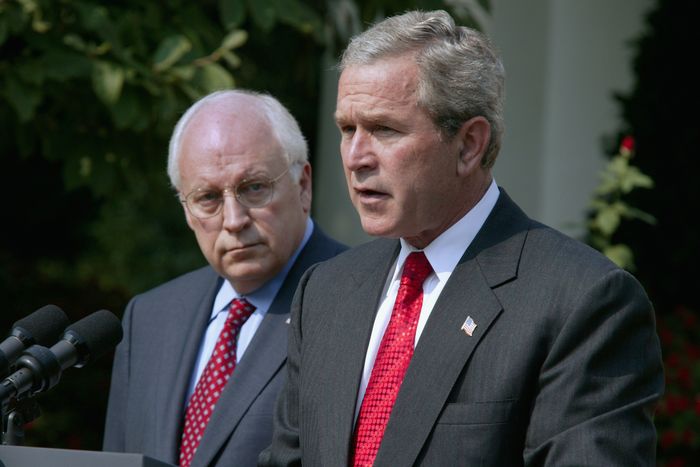
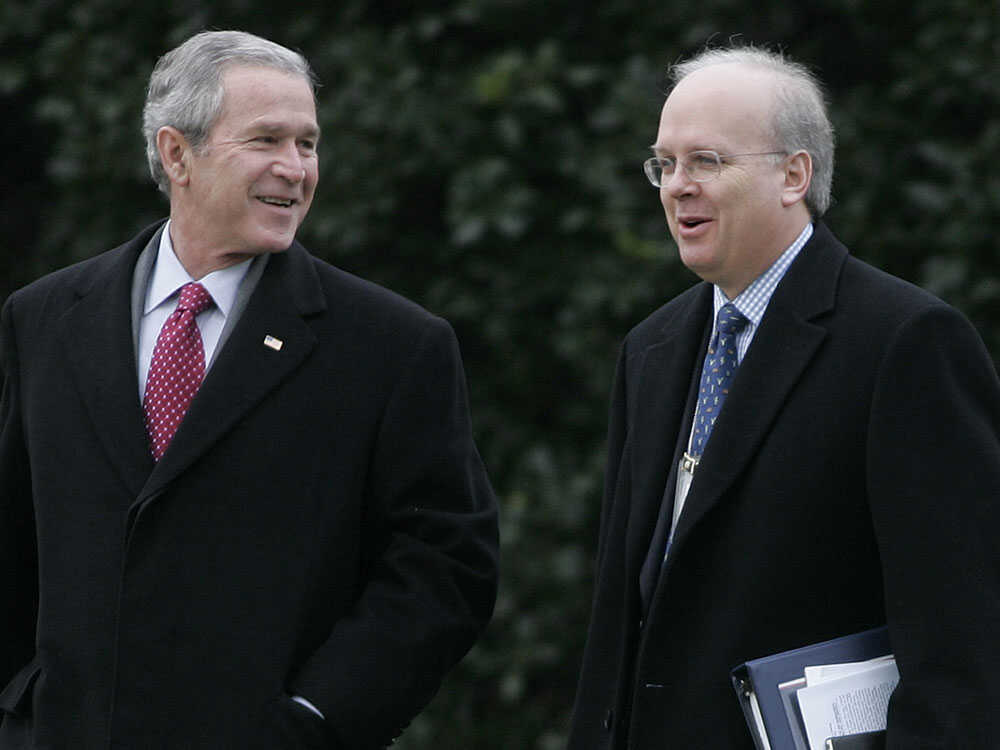
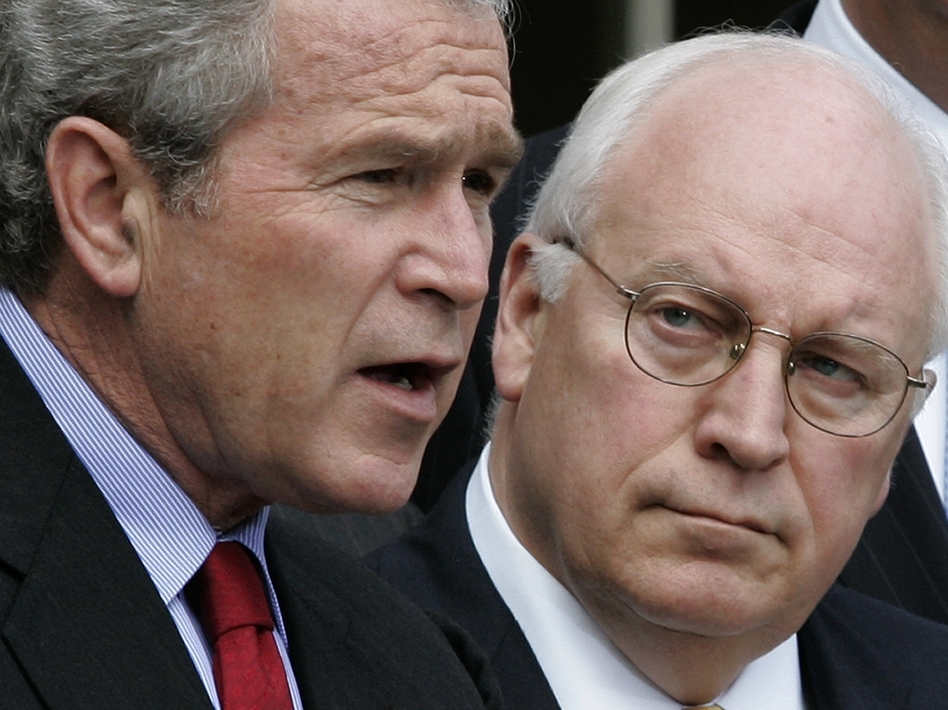
President Barack Obama has been deliberating for some time over one of the many messes left to him by Bush-Cheney: the eight-year-old war in AFGHANISTAN. Our president’s administration has been compared to John F. Kennedy’s “best and the brightest,” and he has a chance to learn from JFK’s misadventure in Vietnam and his finest hour in Cuba.
In stark contrast to Bush-Cheney’s eagerness to go to war, JFK and his brother Attorney General Robert Kennedy were determined to avoid war if it was at all possible. It was a brilliant suggestion by Robert Kennedy that ultimately resolved the crisis. Khrushchev sent a favorable response in which he agreed to remove the missiles if we would promise not to invade Cuba. While we analyzed his offer, a second offer arrived that was unacceptable. It appeared to have originated from the Soviet military or Khrushchev’s Presidium, and there was some question as to whether Khrushchev had been removed from power. Bobby Kennedy recommended that we pretend we never got the second offer and accept the first. It worked! The Soviets removed their missiles from Cuba.
Ronald Reagan cut taxes on the wealthy, borrowed and spent, and tripled the national debt within four years. It was “morning in America,” there was pie in the sky, and we could borrow forever. He sold our soul to Japanese banks and was reelected in one of the largest landslides in American history. The lesson the Republican Party learned from Mr. Reagan was that voters don’t care about deficits.
The first President Bush inherited the huge Reagan debt and the Savings and Loan Crisis. Eventually, to head off a complete economic collapse, he broke his popular but unrealistic campaign promise of “No new taxes.” As a result, he was voted out of office after one term. The Republican base deserted him, apparently believing that he should never have cared about deficits regardless of the consequences.
The second President Bush reinstated Reaganomics, cut taxes on the wealthy, borrowed and spent, went unnecessarily to war in Iraq on a credit card, sold our soul to Chinese banks, and doubled the national debt. His administration didn’t believe in government regulation and refused to deal with his huge deficits. Before he could get out of office, we had the biggest stock market crash since the Reagan Era, the biggest bank collapses since the Reagan Era and also in American history (Lehman Brothers and Washington Mutual), and the near meltdown of the global economy.
Now that President Obama is using deficit spending to get us out of all these messes, the Republican extremists are stirring up their followers to protest the deficit! Where were all these people during the last eight years or during the twelve years of Reagan-Bush? Why didn’t they care when we needed them? They seem to have already forgotten that we are now in the Bush-Cheney Great Recession and that we need to avoid a second Great Depression.
Franklin Delano Roosevelt (Democrat) inherited the Great Depression from Herbert Hoover (Republican) and offered the people a New Deal. Relief, Recovery, and Reform were the three primary issues that he faced. His Relief and Reform efforts were so successful that they have saved us from disaster time and again when some of his successors practiced irresponsible policies. However, the New Deal was less successful in Recovery, and it would take World War II to restore the nation to full employment.
September 17, 1787, was the day the Constitutional Convention signed the U. S. Constitution in Philadelphia. That date is now a federal holiday known as Constitution Day and Citizenship Day. Luckily, after a long hiatus, we now seem to have a president and a Congress that understand and even like the U. S. Constitution.
September 17 is Constitution Day and Citizenship Day. Since the Election of 2008, we seem to be returning to traditional constitutional government, but we are not out of the woods yet.
The two front runners could not be further apart. Henry Fonda plays William Russell, a liberal-intellectual-statesman not unlike Adlai Stevenson. Cliff Robertson plays Joe Cantwell, a conservative-opportunist-hypocrite-mudslinger clearly patterned after Joe McCarthy and Richard Nixon.
eight years. I shall force someone to take the body from him; and Johnny will lead those microphones and cameras, with blood all over him, defending America even if it means his own death, rallying a nation of television viewers with hysteria to sweep us into the White House with powers that will make martial law seem like anarchy.”
1. How Green Was My Valley (1941) with Walter Pidgeon, Maureen O’Hara, Anna Lee, Donald Crisp, and young Roddy McDowell: This Oscar winner for best picture is one of John Ford’s finest achievements. Ford won best director honors for this as well. Oscars also were awarded for photography and art direction. Donald Crisp won the supporting actor award for playing the patriarch of a large Welsh family trying to eke out a living in the coal mines. However, it is Master Roddy McDowell who steals the show. When he joins his father and four older brothers in the mines, we witness child labor depicted as matter-of-fact. Note: The look on his face as he emerges from a cave-in with his dead father in his lap is devastating.
2. Norma Rae (1979) with Sally Field, Ron Leibman, and Beau Bridges: A Jewish labor organizer, played by Mr. Leibman, tries to unionize a textile factory in a Southern state. He finds one sympathetic worker, Sally Field (in her first Oscar winning role), who helps him get the ball rolling. Needless to say, management isn’t happy about this and pulls every trick in the book to defeat the effort.